Senate District 39 candidates share views ahead primary

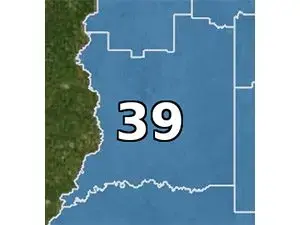
indiana-senate-district-39_from-indianamaps-org-jpg-2

First City News is providing coverage of the Indiana Senate District 39 race ahead of the upcoming primary election.

Four candidates are running for the district seat. The district covers all of Sullivan and Greene counties and portions of Vigo, Daviess, and Knox counties.

The Republican primary is contested. Those candidates participated in on-camera interviews. Those interviews are available to view on our YouTube channel.

The Democratic candidate is unopposed in the primary and will advance to the November ballot. That candidate was sent the same set of questions and provided written responses.

All candidates received the questions in advance. Republican responses are presented as direct transcriptions from the in-person interviews. The Democratic response is presented as submitted in writing.

Minimal editing has been made for clarity and sentence structure.

Candidate responses are presented below.

____________________________________________________________________________________

JEFF ELLINGTON (REPUBLICAN)

QUESTION: Please introduce yourself and tell voters why you’re running for state Senate.
ANSWER: Hi, I’m Jeff Ellington. I’m a Republican, and I’m here today to ask you for your vote to be your next state senator.

I’m married to my wife, Hope. I have two children, Lincoln and Lindsey, and my first grandchild, Liliana. I’m a career retired firefighter, small business owner, and horse farmer. I have experience in local government and as a state representative.

I’m here today to help bring jobs back to our community, to make a thriving community, and with better jobs and a thriving community, everything else gets better—better educational system, better roads and bridges, better parks. Property taxes are too high, and that’s one of the focuses I will commit myself to.

QUESTION: How do you assess the most recent General Assembly session, and what aspects of the legislation were you most pleased with or not pleased with?
ANSWER: So what I liked about Senate Bill 1 during the last legislative session was that property taxes were reduced for homeowners with a 10% tax credit. Also, farmers got deductions on their calculations of how their properties are assessed. That went for two years.

Also, businesses got relief on personal property taxes that have balances of $1 million or less, and that tax bill will be zero.

What I’m sort of disappointed in is property tax relief did not go far enough, not long enough. And with my experience, I hope to bring down property taxes, create jobs, and make our community a better quality of life for everyone.

QUESTION: What is the top issue facing District 39 right now, and how would you address it?
ANSWER: Jobs, the economy, and property taxes, in that order. We all have to have better jobs for our communities. Look, our small communities are shrinking, and some are drying up. We need jobs here locally, close to our kids, our grandchild, our grandchildren, to further stabilize our communities.

My experience of bringing jobs back to this community, cutting the income tax, and making a good policy climate for businesses is what it’s going to take. And I have that experience, and I’m asking for your vote to help bring back and save our small communities in southwest Indiana.

QUESTION: Beyond that issue, what other priorities would you focus on if elected?
ANSWER: Job creation and our economy is key to having growing and prospering communities. Small communities have been forgotten over the last several sessions. I will not forget you.

I will come into your communities, talk with you, listen to you. I think that’s key. I have the ability to reach out to other lawmakers across the aisle, and even with our own party, to make sure that they do not forget our small community in Southwest Indiana.

Job creation is key, and it will bring revenue and job growth to bring taxes and more income for our schools, our roads, our bridges. And it’s just a great opportunity to bring those things back to Southwest Indiana.

QUESTION: How would you work with lawmakers from both parties to move legislation forward?
ANSWER: I think being able to explain each bill or each issue each different part of the community has is key. Being able to answer your phone, for me to come into your community and to listen to you and understand what all the details are—either what’s working or what’s not working for you—and taking that message across the aisle and in the Statehouse, and not only the Statehouse, but our local public officials, cities and towns, county commissioners, county council, and right up to the White House to make sure that the plan here for Indiana is what’s best.

And I think I have the experience of working with all those involved, and a great record on bringing those plans and those jobs and creations back here to this community.

QUESTION: Why should voters choose you to represent District 39 in the State Senate?
ANSWER: Well, look, I’m just like you. I’m an average guy that has seen a problem. Our communities are shrinking. It seems like our small towns have been forgotten with those in Indianapolis.

When I was in the Statehouse, we had a great voice working together, bringing more dollars and more programs back for roads and bridges, Community Crossings grants, investments in our educational system. I was not only a county council member, county recorder, full-time retired firefighter, small business owner, and a horse farmer.

I do a lot, but what I am great at doing is focusing on the task at hand and listening to make sure that I know what your problems are and listening to what you think the fix might be.

I’m a phone call away. My cell phone is on seven days a week, except for church on Sunday morning. I take calls, I come visit. I tour the factories. I have experience in farming, and I tour with the farmers and local companies and the schools. And that’s what it takes—someone that’s open, has an open mind to listen, and to be there for you.

_______________________________________________________________________________________

KRISTI RISK (REPUBLICAN)

QUESTION: Please introduce yourself and tell voters why you’re running for state Senate.
ANSWER: So I’m Kristi Risk. I’ve been married for 34 years. I have four children, three sons who are active duty in the military, and a daughter. My daughter has my first granddaughter and only granddaughter—for now—until my son and his wife have their first child in July. So I’ll have two granddaughters at that point in time.

I’ve been a small business owner. I’ve worked in the halls of Congress, and I currently work for the State of Indiana as the Director of Government Affairs. I understand that, from the perspective of the rural communities, a common-sense way outshines big bureaucracy and demographics.

And so I’m running for the seat just to be a voice for this district. I am a problem solver. I’ve got good ideas that I want to take. I want to fight in the Senate for our district. I feel like we’ve been a flyover district for many years, and it’s time that the Indiana State Legislature takes notice of Indiana District 39.

QUESTION: How do you assess the most recent General Assembly session, and what aspects of the legislation were you most pleased with or not pleased with?
ANSWER: So I was very pleased that the House and the Senate both were proponents of supporting the big, beautiful bill that President Trump put out. We saw some great things in our legislature, especially SB 243, which addressed overtime and tips.

So I was very happy to see that for our constituents. A couple other things—we addressed the penny issue, so now you don’t get pennies when you get your change back anymore. We also addressed loan interest, so if you buy an American-made vehicle, you get to write off your loan interest up to $10,000.

We worked with the Department of Revenue so that now constituents can get their tax information electronically. I think that’s a huge benefit to a lot of people. Oh, and we updated the adoption credits—so now 20% up to the federal or up to a $2,500 adoption credit, and that’s been huge.

My one concern is these are great things, it’s a great win, but they expire. So in 2027, we’re going to have to address this in the state legislature on whether we want to keep these things or if we want to terminate them. And I want to be there fighting for our constituents to keep these and not let them sunset.

QUESTION: What is the top issue facing District 39 right now, and how would you address it?
ANSWER: So I think the very top issue right now is infrastructure and rural funding. So we have a real need in our district to make sure that our infrastructure is meeting our pace of growth and that we’re continuing to see our communities and our small rural counties funded.

And so, you know, one of the things I think that I have a concern with is how our funding happens for our roads. So we currently use an algorithm that looks at our population and how many license plates that we sell each year or register. And, you know, that’s going to pander more to an urban area where they have a higher population and more registrations, and that really hurts a small community.

So I would like to see the infrastructure for our roads funding based on miles. And I know we did have some adjustments for miles, but we’ve always looked at center miles, and this time it was how many lanes. So again, that panders to a larger suburban area that’s going to have a lot more lane miles than we would locally.

Some other issues that I think are really important to remember is that our gas tax—so it comes into the bucket, the gas tax and diesel tax all come into the bucket—and 63% of that tax goes to INDOT. Only 37% goes to rural communities. So another area that I think we need to address is people are like, well, if I’m okay to pay the gas tax if it’s funding the roads, but I’m not so sure that we’re actually getting those roads funded the way we need to with that algorithm.

QUESTION: Beyond that issue, what other priorities would you focus on if elected?
ANSWER: Yeah, so of course energy independence. You know, I’m a very huge supporter and proponent of coal, keeping our baseline costs low. I oppose premature retirements. I think it’s really super important that we support the federal emergency funding like what we have with the Schaefer and Cayuga plants, because during that storm, Schaefer provided 285,000 megawatts of electricity and Cayuga provided 30.

So that was paramount. That keeps the power from being shut off. So definitely a proponent of that. Data center accountability—that’s a huge issue in our district. We have to have transparency. I think we need to make sure that we protect home rule so that our commissioners and our councilors are having the say and that they’re involved in these transactions.

So I think there’s a lot of transparency that we need to hold our data centers accountable for. And it’s really important to me that we incentivize Indiana-first fueling so that we’re buying our fuel and buying our resources from Indiana first.

I think a couple other things that I’d like to address is our economic growth—so reducing regulations. By 2029, we’re supposed to have reduced 25% of our regulations, and I think we need to really look at some of our outdated regulations and make sure that some of our sunsetting regulations go ahead and sunset. That will help with the smaller businesses and the permitting dashboard.

So as a small business owner, when I would apply for a permit, a lot of times it would be a long time. There would be silence. I wouldn’t hear anything. I’d be calling back. Sometimes you’re just getting an answering machine. So I really would like to see a dashboard where you can go in and your permits are kind of in real-time tracking so that you can keep up on what’s going on.

I like a one-stop shop, you know, instead of going to several different agencies, kind of go to one stop for that. And then I’m really big on allowing small farms to be able to sell directly to the consumer, so I’ll continue to advocate for that.

And again, I am a rural gal, so making sure that the local commissioners and councils have the say in their counties is big to me.

One other thing—actually two other things—rural hospitals. We have a $207 million grant coming. I think it’s very important that we make sure that that money is going to the hospitals and it goes to them in block grants. So a lot of times we set these limitations on grants, and then if you don’t meet the exact criteria, it goes back. Well, I think we need, again, block grants because they know best how to use that money.

And I also am a proponent for, in the smaller communities, standard procedures not having to have those reauthorized because that creates a lot of overhead for the hospitals. And then on the police, fire, and EMS, codifying that to be essential so that they don’t have to continue to fight for every dollar based on political wins.

QUESTION: How would you work with lawmakers from both parties to move legislation forward?
ANSWER: Yeah, so one of my skills is problem solving and negotiating. I’m a very good listener. I enjoy listening. I get out and I talk to people all across the district now. I mean, I’m the Director of Government Affairs for everything south of I-70.

So I’m constantly in meetings with commissioners and council members and directors of economic development and learning and listening. I believe that the way you get more passed and you get more done is by listening and working together. So I will be a negotiator on behalf of our district.

_____________________________________________________________________________________

TANNER BOUCHIE (REPUBLICAN)

QUESTION: Please introduce yourself and tell voters why you’re running for state Senate.
ANSWER: My name is Tanner Bouchie, and I’m running for state Senate because I love our community. I want our community to be the best place to raise a family and grow a business. I’m doing both right now.

When my daughter, who just turned four years old, grows up and decides where she wants to make her home, I hope she sees our community thriving and wants to make her home here.

QUESTION: How do you assess the most recent General Assembly session, and what aspects of the legislation were you most pleased with or not pleased with?
ANSWER: The short session that we just finished was filled with activity. For the most part, there was a flurry of bills filed, and many people were trying to prevent certain bills from passing. It was a rush to the end.

What I would like to see is a productive long session coming up where we address property tax assessments and standardize them to be more transparent. We need to build confidence in the system so taxpayers know how they’re being assessed and that they’re being assessed fairly.

That’s one aspect of property tax reform that has yet to be seriously addressed, and we need to address it.

QUESTION: What is the top issue facing District 39 right now, and how would you address it?
ANSWER: We need to address affordable and reliable electricity. There’s nothing more affordable and reliable than coal. Our entire way of life depends on the fact that when we flip a light switch, the lights come on and it doesn’t cost too much money.

For too long, we’ve invested in less reliable and less affordable forms of electricity. We need to invest in what works.

QUESTION: Beyond that issue, what other priorities would you focus on if elected?
ANSWER: We need to make sure that our rural emergency services are sustainable and well-functioning into the future. Things like volunteer firefighters and EMS workers are critical for our rural way of life.

Every department I talk to is struggling with recruitment, retention, and affording equipment. We need sustainable solutions that help those organizations thrive, because they are the glue that holds our community together. It’s also an economic development driver, because when we have effective fire coverage, it brings down insurance rates and allows businesses to invest in the community.

We also need to cut the Indiana gas tax. Nobody drives more miles or bigger trucks than we do here in this community, so relying on the gas tax disproportionately harms our area.

Those are two major issues we need to address. I’m also pro-life, and I support the right to keep and bear arms.

QUESTION: How would you work with lawmakers from both parties to move legislation forward?
ANSWER: We’re going to look for areas of agreement. When we can find agreement that benefits our community, I’m going to work toward that goal.

On every issue, I’ll consider what, in my best judgment, will be good for our district. If that means working with people from our party or another party to get good results for our community, that’s what I’m going to do.

QUESTION: Why should voters choose you to represent District 39 in the State Senate?
ANSWER: As I said, I love our community, and I’m serious about wanting it to be the best place to raise a family and grow a business.

I’ve lived in this community my whole life. I was born here in Vincennes and graduated from South Knox High School. My wife is from Bruceville and graduated from North Knox High School.

Today, we live in this community where both sets of grandparents for our four-year-old daughter also live. That’s a blessing, and I want to see a community where multiple generations can live and thrive together.

________________________________________________________________________________

JOSEPH BAUGHMAN (DEMOCRAT)

QUESTION: Please introduce yourself and explain what led you to run for State Senate.
ANSWER: My name is Joseph Baughman. I have deep roots in Senate District 39, having been born and raised in Sullivan, lived in Linton for 17 years, and recently relocated to Vincennes. At 47, I am married to Karen, and we have 4 children and 5 grandchildren. With 22 years of professional experience in the engineering and quality fields, I have decided to run for State Senate because I felt that something needed to be done about the unsustainable direction of the state and federal governments.

Wages are low, energy costs are high, healthcare is becoming unattainable for larger swaths of the population, and corporations and billionaires are banking larger and larger portions of the wealth. This trend is unsustainable for a democratic society and must be turned around by candidates willing not only to run for office, but also listen to the will of the people that sent them there.

QUESTION: How do you assess the most recent General Assembly session, and what aspects of the legislation were you most pleased with or not pleased with?
ANSWER: I see the most recent session as an attack on the most vulnerable Hoosiers. The tightening of SNAP and Medicaid requirements will reduce or eliminate food assistance and healthcare for approximately 60,000 Hoosiers, most of whom hold at least 1 job, if not 2. I do not believe that HEA 1002 went far enough to protect Hoosiers from these predatory monopolies that we call power companies. I want to pass legislation that eliminates taxes on utility bills, as well as draft legislation that would put a 1.5% surcharge on all utility companies’ profits over $3 million. This money would be earmarked for a special fund for utility customer offsets.

QUESTION: What is the top issue facing District 39 right now, and how would you address it?
ANSWER: I think it’s up there with the top issue facing the nation, the state, and the district: low wages and high costs. Housing is almost completely out of reach for a significant portion of the district due to high costs from investment seekers driving up the costs. The people who once could afford their home are having a harder time keeping it. Wages have lagged profits by approximately 143% since 1979. The people who produce the economy are being forced out of it. I think one way to start to right the ship is to make a wage floor of $19/hr, a starting living wage, and tie it to the cost of living per district. So, if your rent goes up, so does your paycheck.

QUESTION: Beyond that issue, what other priorities would you focus on if elected?
ANSWER: A few that I would like to address are the “Delaware loophole” and the “Dark Store loophole.” It’s more than time that corporations pay back into the communities from which they extract resources. I would like to use the revenue from this and cannabis legislation to fund public schools as well as public services. In addition to this, I want to increase the corporate tax rate from 4.9% to 8.5% with a 1.5% surcharge on all profits over $3 million. This money can be earmarked for rural training centers as well as inpatient clinics free at time of service.

QUESTION: How would you work with lawmakers from both parties to move legislation forward?
ANSWER: I will be willing to reach across the aisle if the other side is willing to compromise as well. This comes with a caveat that I will never compromise my principles or beliefs or the integrity of the district.

QUESTION: Why should voters choose you to represent District 39 in the State Senate?
ANSWER: Because I know the district in my bones. I’ve lived in it my entire life, and I know the struggles. I don’t know them because some data point has told me. I know because I’ve spoken with my neighbors and I live it myself every day. A “contract” between the state and corporations was agreed to a little over 20 years ago. They said we will lower your taxes and give you all these benefits if you bring the jobs and wages. The corporations didn’t keep up their end of the deal, so now it’s time to level the playing field.


Leave a Reply

Your email address will not be published.

You may use these HTML tags and attributes: <a href="" title=""> <abbr title=""> <acronym title=""> <b> <blockquote cite=""> <cite> <code> <del datetime=""> <em> <i> <q cite=""> <s> <strike> <strong>

*